
Monthly Budget in India (Simple Step-by-Step Guide) is the foundation of personal finance.
If you don’t know where your money goes, you can never control it — no matter how much you earn.
The good news?
You don’t need complex spreadsheets or finance degrees to create a budget. You only need clarity, discipline, and a simple system.
In this guide, you’ll learn how to create a monthly budget in India, step by step, in a practical and realistic way.
What Is a Monthly Budget in India?
A budget is a plan for your money.
It tells you:
- How much you earn
- How much you spend
- How much you save
- Where you need to improve
In simple words:
A budget is you telling your money what to do — instead of wondering where it went.
Why Budgeting Is Important
Many people believe budgeting is restrictive. In reality, budgeting gives you freedom and peace of mind.
Here’s why budgeting matters:
1. Helps You Save Consistently
Without a budget, saving becomes random. With a budget, saving becomes automatic.
2. Prevents Overspending
You become aware of unnecessary expenses.
3. Reduces Financial Stress
Knowing that your expenses are under control reduces anxiety.
4. Helps You Reach Financial Goals
Whether it’s buying a phone, building an emergency fund, or investing — budgeting makes it possible.
Who Should Create a Budget?
Short answer: Everyone.
Budgeting is essential for:
- Students
- Salaried professionals
- Freelancers
- Small business owners
- Beginners in investing
Even if your income is low, budgeting helps you maximize what you have.
Step 1: Know Your Monthly Income
The first step in budgeting is clarity.
Calculate your total monthly income, including:
- Salary (after tax)
- Freelance income
- Side hustle income
- Any regular additional income
👉 Use net income, not gross income.
Example:
- Salary (after tax): ₹35,000
- Freelance work: ₹5,000
Total monthly income = ₹40,000
Step 2: Track Your Monthly Expenses
Most people fail at budgeting because they don’t track expenses honestly.
Track expenses for at least one month.
Expense categories to track:
- Rent / PG
- Groceries
- Electricity & internet
- Mobile recharge
- Transport
- Food outside
- Entertainment
- Shopping
- Subscriptions
Use:
- A notebook
- Google Sheets
- Any expense tracking app
The goal is awareness, not perfection.
Step 3: Separate Needs vs Wants
This step changes everything.
Needs (Essential)
- Rent
- Food
- Utilities
- Transport
- Medical expenses
Wants (Optional)
- Eating out
- OTT subscriptions
- Shopping
- Travel
- Entertainment
You don’t need to eliminate wants — you need to control them.
Step 4: Use the 50–30–20 Budget Rule (Beginner-Friendly)
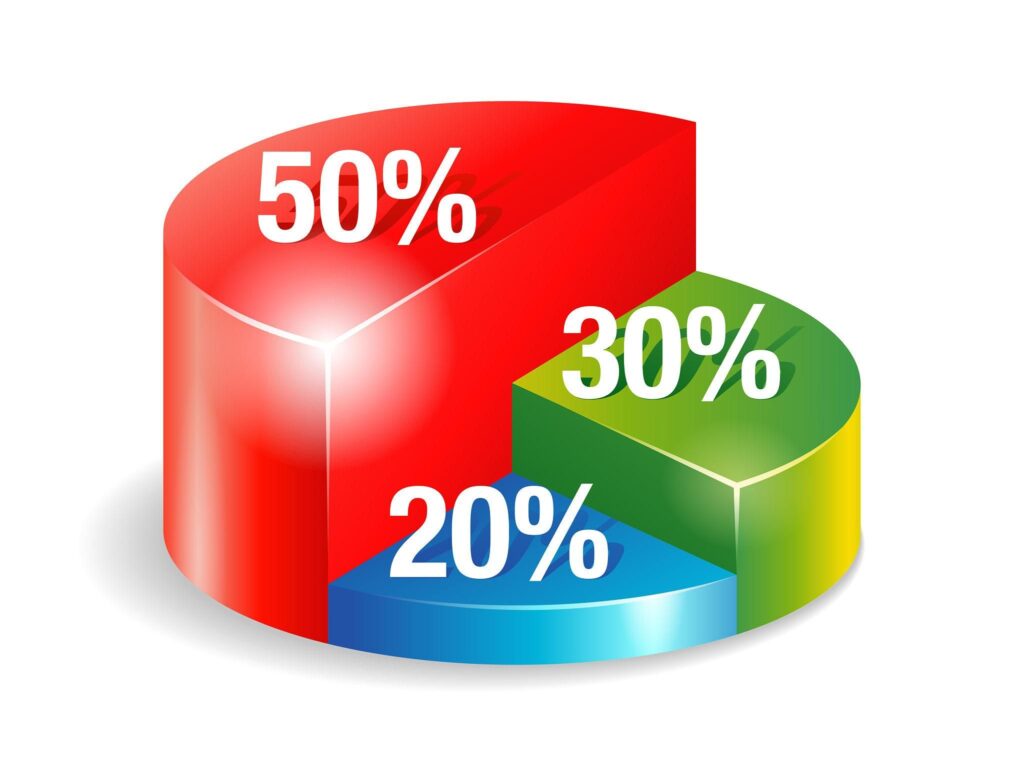
The 50–30–20 rule is one of the simplest budgeting methods.
How it works:
- 50% → Needs
- 30% → Wants
- 20% → Savings & investments
Example (₹40,000 income):
- Needs: ₹20,000
- Wants: ₹12,000
- Savings: ₹8,000
You can adjust percentages, but saving must be non-negotiable.
Step 5: Pay Yourself First
This is one of the most important budgeting rules.
Save first. Spend later.
As soon as you receive income:
- Transfer savings amount
- Invest (if applicable)
- Spend the remaining money
If you wait to save at the end of the month, you usually save nothing.
Step 6: Build an Emergency Fund
Before investing heavily, focus on building an emergency fund.
Emergency fund basics:
- 3–6 months of expenses
- Easily accessible
- Low-risk
Where to keep it:
- Savings account
- Liquid mutual fund
This fund protects you from:
- Job loss
- Medical emergencies
- Unexpected expenses
Step 7: Adjust Your Budget Monthly
Your budget is not permanent.
Life changes:
- Salary increases
- Expenses change
- Goals change
Review your budget every month and adjust it.
Budgeting is a living system, not a fixed rule.
Common Budgeting Mistakes to Avoid
1. Unrealistic Budget
If your budget is too strict, you’ll quit.
2. Ignoring Small Expenses
Small daily expenses add up over time.
3. Not Reviewing Budget
A budget without review is useless.
4. No Buffer Amount
Always keep a small buffer for unexpected costs.
Budgeting for Different People
Budgeting for Students
- Track expenses carefully
- Avoid unnecessary debt
- Save small amounts consistently
Budgeting for Salaried Employees
- Automate savings
- Avoid lifestyle inflation
- Plan for taxes
Budgeting for Beginners in Investing
- Budget before investing
- Don’t invest money needed for expenses
- Keep goals realistic
Simple Budgeting Tools You Can Use
You don’t need complex tools.
Beginner-friendly options:
- Google Sheets
- Excel
- Notebook
- Expense tracking apps
Choose what you’ll actually use.
How Budgeting Helps You Invest Better
Budgeting:
- Creates investable surplus
- Prevents emotional decisions
- Builds discipline
- Supports long-term wealth
Without budgeting, investing becomes risky and inconsistent.
Budgeting Is a Skill, Not a Restriction
Many people avoid budgeting because they think it limits enjoyment.
In reality:
Budgeting gives you permission to spend — without guilt.
When you know your limits, you enjoy your money more.
Why Moneyxo Recommends Simple Budgeting
At Moneyxo, we believe:
- Simple systems work better
- Consistency beats complexity
- Awareness leads to control
You don’t need perfection.
You need clarity and discipline.
Final Thoughts
Budgeting is the starting point of financial freedom.
You don’t need to earn more to start budgeting.
You need to start budgeting to earn more value from your money.
Start small. Review monthly. Stay consistent.
👉 What to Read Next on Moneyxo
- What Is Personal Finance? A Beginner’s Guide for Indians
- Emergency Fund Explained: How Much You Need and Where to Keep It
Moneyxo — Smart Money Made Simple